How Engineers Will Make The Costa Concordia Float Once Again

Next week, Italians will finally say goodbye to the wrecked Costa Concordia cruise ship that has been sitting off the coast of Giglio Island for two and a half years.

Ladderlimb

One for the DIY fan, the award winning LadderLimb is a helpful ladder accessory that allows you to securely hang in place buckets...

Make Hand Music With Your Own Pair Of Imogen Heap's Gloves

Imogen Heap is one of those musicians who has long embraced tech, and now she's giving you a chance to get your hands on her musical gloves.

13 Of The Weirdest Computer Mice We've Ever Seen

Not too long ago, we dived into the world of unconventional, strange and often horrible computer pointing devices...

G-BOOM Wireless Bluetooth Boombox Speaker

Winner of “Speaker of the Year” from iLounge, ultimate Bluetooth Boombox pumps out powerful sound and full bass...

Redirecting city-killer asteroids with kamikaze spacecraft


Nowadays, it seems like meteors are finding their way into the news more and more. Two days ago, the skies over Alabama played host to one, and we probably don't have to remind you about the explosive visitor that violated Russian airspace back in February. But both of these recent events pale in comparison with the monster space rocks that European scientists are trying to prepare for for.
The NEOShield Consortium is focused on developing defenses against city-killer asteroids. Every few hundred years, their estimates say, Earth is at risk from one of these lurking menaces. What's more, we can't think of any cities that have been wiped off the face of the planet in recent years, so arguably, we're past due for something catastrophic.


To keep Earth safe, Project NEOShield is designing a series of massive spacecraft known as kinetic impactors. These will be launched from Earth at a high rate of speed and suicide themselves against any dangerous incoming asteroids. Hopefully, this will either speed up or slow down the asteroids enough to allow for a near-miss instead of a direct hit.


In testing what effect their doomed spacecraft will have on giant asteroids, NEOShield scientists have accelerated millimeter-sized objects to over 22,000 miles per hour before slamming them into blocks of stone.


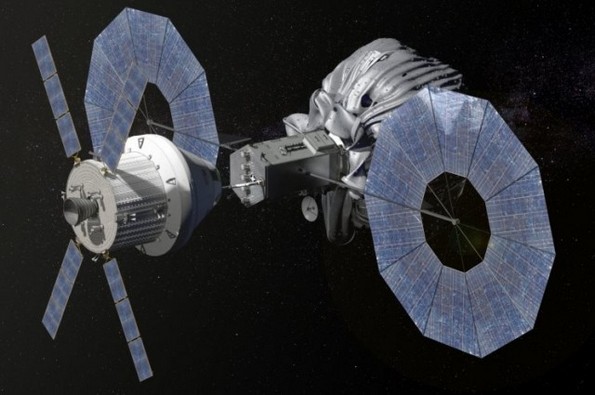
NASA plans mission to capture asteroids using a big space bag


NASA released new details on its proposed mission to divert a local asteroid into an accessible orbit today. The plan relies on a combination of already-launched proven hardware and some of the cutting edge technology still in development. The first step — picking and choosing a potential target — would be handled by the Wide Field Infrared Survey Explorer (WISE). WISE was an infrared telescope that launched in 2009 with a two-year mission to image 99% of the visible sky in infrared wavelengths. Once this mission completed successfully, NASA assigned the craft a second four-month mission to track and discover near-Earth objects (NEOs). NEOs that don’t reflect visible light, like small asteroids, can still be detected by their heat emissions.


The Russian meteorite explosion earlier this year put a new emphasis on the importance of tracking NEOs; the object that detonated in the skies above Chelyabinsk was too small to have been detected by other means. WISE has been in hibernation since the conclusion of its second mission, but was in perfect working order when NASA last communicated with the satellite in September, 2012. If all goes as planned, NASA would use WISE to find a target asteroid in an appropriate orbit.
Once that’s done, the next phase of the mission involves launching an unmanned probe to intercept the target and drag it back into a retrievable position — probably by wrapping a bag around it. While this might sound goofy (and require some hefty materials science engineering) keep in mind that we’re talking about a very modest rock. A crew would then be dispatched on an Orion capsule mated to the upcoming heavy lifter variant of the Space Launch System to retrieve samples of the asteroid and return them to Earth.